
Owned

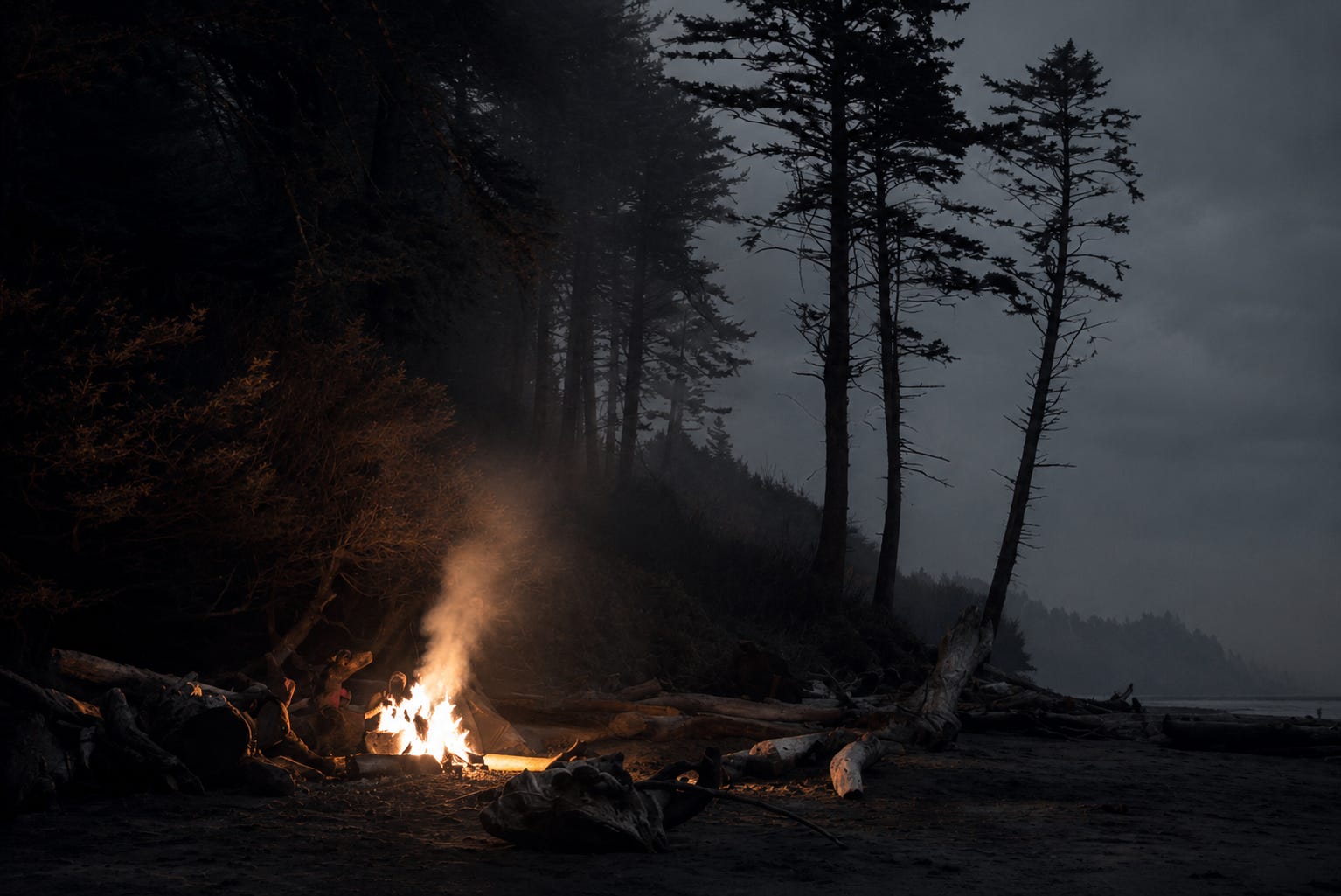
He was ready for the appointment. Clean, wearing his good shirt, good enough by local standards to be safe from vanity. They called it work, and work was a generous word for what those men did after dark.
The hovel kept its cold, his breath fogging.
He dressed in that cold like a man preparing for church or a wake, uncertain what the night required.
His mother used to set the kettle on at this hour, the chipped red pot bright against the dark stove, the blue television light murmuring so the room never quite emptied after she had stepped out of it. He remembered reaching for the handle before she finished asking.
His brother was doing a nickel upstate. Eighteen months left, if lawyers and saints proved useful. That hope lasted until the third Christmas made liars of them all.
The organization his brother never spoke of while serving time sent friendly representatives who taught him the charity peculiar to wolves. Gifts came first. A carton on the step. A television still boxed. A wheelchair ordered for his mother last winter.
It was still pending delivery when his mother died.
After the handouts came the gift of work, of earning money. That was when the packages began to arrive. Things to hold for a while. Things to hand off when their man came asking. He was not allowed questions.
He liked being trusted with weight. He liked the nods from older men with bad reputations. They showed him how money moved, how silence earned, how a boy could stand near power and call it welcome. He agreed before they finished telling him what.
Most of the outfit out of Bachelor Flat Road was bound that night for the old motel, where they often met face to face with the other men who ran the county.
He was known by them all now, and old enough to be invited to the meeting they held first in the clearing.
There was drinking, laughter, music. Leather and chrome caught firelight. Someone fixed his collar roughly and stepped back to inspect him. A woman shouted from a truck bed. He never saw her clearly. He held his liquor with the dignity available to him and endured the jeering, the rough hazing every member of that syndicate had once endured.
For once, he felt invited.
The bottle filled glasses and passed hand to hand.
Beyond the trucks, a county cruiser idled with its headlights off and music blaring.
He was still taking in the scene when the onyx ram came near the fire, great and black, with smaller goats nosing after him. The crowd made way for them, ugly and uncanny guests, their jeweled eyes holding flame without warmth.
Someone filled the boy’s cup and turned him toward the oak.
A sack hung from a low branch, heavy enough to keep its shape. Men stood around it with the mocking manners of mourners who had decided to be cheerful about the thing. Some saluted. Others offered comic elegies.
He stared at the sack, too vain to ask what it meant.
The ram was already charging.
The first blow drove the sack backward and brought a low human sound out of it.
Men laughed.
The boy searched them for the face he was meant to wear, found it, and put it on.
The ram struck again. The sack twisted hard on the rope. Something inside it kicked once or tried to. The next impact drove the burden sideways into the trunk, and the crunching sound it made could not be mistaken for wood.
The goats crowded close, excited by the motion. One butted the lower part of the sack without force enough to matter. Another took its turn and stumbled away. The men loved it. They clapped and cursed and raised bottles toward the animals, cheering the effort.
The ram backed away, hooves scraping dirt.
Someone shouted encouragement.
Someone made a joke about county justice.
The boy lifted his cup again.
The ram came again.
The blow landed with awful accuracy. The sack jumped and folded around the force. A wet crimson burst from inside it, followed by a whimper so pitiful the boy forgave himself for hearing it.
The men were watching him now.
He drank.
The ram struck again.
At some point the thing inside the sack began pleading through the canvas. No words came clear. The boy could hear only the effort of words searching for a shape the pain would allow.
Then it stopped.
The rope still swung.
The ram lowered his head once more and hit the sack after there was no longer need.
The men cheered loudest then.
The boy made sure to be seen enjoying himself. He laughed when laughter opened beside him. He raised his cup when cups were raised. He understood, with gratitude, that he was one of them, that he would belong somewhere.
Afterward the stained sack came down and was thrown onto the fire.
The fire took the canvas first.
It shrank, blackened, split, and drew back from what it had covered.
He watched the thing lying still in the flames. No part of its mangled, heaping anatomy resolved into anything he had a name for. What the ram had killed was there before him, exposed and burning, yet it would not become a man, or an animal, or any other category his mind offered up in panic.
The men kept drinking.
Around him, shadows rose large across the dense trees lining the clearing, and the party reached its peak.
Pain split behind his eyes, and his memory of the night closed.
He woke in his hovel wearing his good shirt and one boot. His mouth tasted of smoke and pennies. Mud had dried on his cuffs. Someone had left a bag of groceries on the kitchen table. He could not decide whether it was kindness or joke.
By noon he reported back at Florence Park Motel.
The man who ran the circuit kept a desk in the office. A lamp burned low.
“They said we had to take you home,” the man said.
The boy waited.
His head still hurt. The pain had a shape now, an ache bored clean through and left open to weather.
“No one gets shown that by accident.”
The man slid new packages across the desk.
The boy picked them up.
“Here to do my part,” he said.
“Good,” the man said. “You have a place now.”
He went out clean, cold, and owned. He chose to ignore the smoldering pyre left near the oak and got to work.
Haunting read! The need to belong and to be accepted is unmistakable carousing through these nightmarish lines.
A very modern ritual. Great read too